AI Alignment & Safety Fellowships, Research Roles, and Funding in 2026
If you have spent the last few months refreshing job boards and fellowship pages hoping to break into AI safety research, you already know how scattered the information is. One page says a program is open, another says it closed months ago, and by the time you compare stipends across five different websites the deadline has already passed. This guide fixes that problem in one place.
This roundup focuses specifically on research-oriented opportunities: structured fellowships with cohorts and mentorship, research staff positions at AI governance organizations, and grant funding for independent research. GovAI, for example, also has open operations and leadership roles like DC Chief of Staff and Head of US Policy that aren’t covered here since this guide is scoped to research work. Each entry below is labeled by type, status, and the date it was last checked, with a link to the official source.
Every entry was checked against its official program page as of August 14, 2026. Fellowship deadlines change often, so confirm the current date on the official page before you start an application.
Quick Answer
Three research-focused opportunities with fixed deadlines are currently open: GovAI’s Research Scholar, GovAI’s Research Fellow, and the AIAF Fellowship, all due within days of each other. MATS is opening its Winter 2026 stream applications in late August, so it’s better described as upcoming than closed. IAPS, Astra, CAIS, the OpenAI Safety Fellowship, and the Anthropic Fellows Program have all closed their current application windows. DeepMind’s academic fellowships run through individual partner universities with no single global deadline, and Coefficient Giving has several fund-specific application routes, including some rolling opportunities, rather than one general “apply anytime” pathway.
Opportunities With Open Deadlines Right Now
- GovAI Research Scholar — Deadline: August 16, 2026 (AoE)
- GovAI Research Fellow — Deadline: August 16, 2026 (AoE)
- AIAF Fellowship — Deadline: August 17, 2026
- MATS Winter 2026 — Applications are open; stream deadlines vary, with Neel Nanda’s stream due August 29, 2026.
Rolling / Ongoing Funding
- Coefficient Giving — Specific funding programs have their own application schedules, including rolling opportunities.
- AI Safety Research Fund — Check the current funding call for application status and deadlines.
Comparison Table
| Opportunity | Type | Status | Deadline | Funding | Location | Best For |
|---|---|---|---|---|---|---|
| GovAI Research Scholar | Research role | 🟢 Open | Aug. 16, 2026 | See official listing | London / Washington, D.C. | Researchers/practitioners moving into AI governance |
| GovAI Research Fellow | Research role | 🟢 Open | Aug. 16, 2026 | See official listing | London / Washington, D.C. | Experienced AI-governance researchers |
| AIAF Fellowship | Fellowship | 🟢 Open | Aug. 17, 2026 | $12,000* | Remote | Beginners, career-changers |
| MATS Winter 2026 | Fellowship | 🟢 Open | Aug. 29 / varies by stream | Varies | Berkeley / London | Technical alignment researchers |
| Coefficient Giving | Research funding | 🔵 Rolling | Varies by fund | Varies | Global | Researchers / organizations |
| AI Safety Research Fund | Research funding | 🔵 Ongoing | Check current call | Varies | Global | Independent AI-safety research |
*Funding figures should be confirmed against the current official program page before applying.
Tip: If you’re comparing opportunities, don’t look only at the stipend. Consider mentorship, research freedom, compute access, network, location, visa requirements, expected time commitment and the likelihood of continuing into a longer-term research role.
Open Now
1. GovAI Research Scholar
The Research Scholar role at the Centre for the Governance of AI is a one-year visiting position for researchers and practitioners transitioning into or deepening their work in AI governance, with freedom to pursue their own projects, whether that’s policy research, technical research, or advising policymakers.
- Host institution: Centre for the Governance of AI (GovAI), London and Washington, D.C.
- Application deadline: August 16, 2026, 23:59 Anywhere on Earth
- Duration: One year, visiting position (not renewable)
- Funding: Competitive salary; varies by location — check the official listing for current figures
- Official source: governance.ai/opportunities/research-scholar
- Last verified: August 14, 2026
2. GovAI Research Fellow
The Research Fellow role is a more senior position than Research Scholar: fellows play a central part in shaping GovAI’s research agenda, mentor early-career researchers, and advise policymakers directly. GovAI’s own listing calls for a demonstrated ability to produce impactful AI governance research, not simply an interest in the field.
- Host institution: Centre for the Governance of AI (GovAI), London and Washington, D.C.
- Application deadline: August 16, 2026, 23:59 Anywhere on Earth
- Duration: Two-year contract, with the possibility of renewal
- Funding: Competitive salary; varies by location — check the official listing for current figures
- Eligibility: Experienced researchers with a demonstrated record of impactful AI governance research
- Official source: governance.ai/opportunities/research-fellow
- Last verified: August 14, 2026
3. AIAF Fellowship
The AIAF Fellowship is an eight-week, fully remote research program run by the AI Alignment Foundation in partnership with AE Studio. It pays a $12,000 stipend on top of full compute and research infrastructure, and it does not require a PhD or a published research record to apply.
- Host institution: AI Alignment Foundation, in partnership with AE Studio
- Application deadline: August 17, 2026
- Program dates: September 8 to October 30, 2026
- Funding: $12,000 stipend plus compute and infrastructure
- Format: Fully remote, with an optional in-person Demo Day in Los Angeles (travel covered)
- Eligibility: No PhD or published research required
- Official source: aialignmentfoundation.org/fellowshipprogram
- Last verified: August 14, 2026
Opening Soon
4. MATS Program (Winter 2026)
MATS, short for ML Alignment & Theory Scholars, is one of the most established AI safety research fellowships, running out of Berkeley and London across seven tracks including empirical research, theory, policy, and security. The Autumn 2026 cohort already closed, but MATS’s official application page confirms Winter 2026 pre-applications are live now, with most stream-specific applications expected to open in late August.
- Host institution: MATS Research, Berkeley, CA and London, UK
- Funding (Autumn 2026 cohort, current published figures): $12,500 stipend plus up to $20,000 in compute support, with free housing, meals, travel support, and J1 visa sponsorship if required
- Tracks: Empirical, Theory, Strategy & Forecasting, Policy & Governance, Systems Security, Founding & Field-Building, Biosecurity
- Program length: 10 to 12 weeks, full-time (40 hours/week), with an optional 6 to 12-month extension for a subset of scholars
- Status: Opening soon. Pre-applications are open now; most stream applications open in late August 2026
- Official source: matsprogram.org/apply
- Last verified: August 14, 2026
Closed / Current 2026 Cohorts
5. IAPS AI Policy Fellowship
Run by the Institute for AI Policy and Strategy, this fellowship is built for professionals moving into AI governance work rather than technical researchers. Fellows split their time between a mandatory two-week residency in Washington, D.C. and mentored remote work on national or global AI policy projects.
- Host institution: Institute for AI Policy and Strategy (IAPS), Washington, D.C. and remote
- Program dates: June 1 to August 21, 2026 (current cohort in session)
- Funding (last cohort): $15,000 stipend for Fellows, $22,000 for Senior Fellows
- Eligibility: Open to undergraduates through senior professionals with a bachelor’s degree; no IELTS or language test required
- Status: Closed for this cycle. Next application window has not been announced
- Official source: iaps.ai/fellowship
- Last verified: August 14, 2026
6. Astra Fellowship
The Astra Fellowship is Constellation Institute’s flagship AI safety program, a fully funded five-month in-person fellowship based in Berkeley. Constellation’s own program page confirms that over 80 percent of the first cohort moved into full-time AI safety roles at organizations including OpenAI, Anthropic, Google DeepMind, Redwood Research, and METR.
- Host institution: Constellation Institute, Berkeley, CA
- Program length: Five months
- Funding (last cohort): $8,400/month stipend plus a $2,000 travel budget (Strategy & Governance stream)
- Visa support: J-1, F-1/CPT, and OPT supported with DSO approval
- Status: Closed. Application deadline for the last cohort was May 3, 2026. Constellation’s site currently invites people to register interest for the next cohort, but has not confirmed an official date
- Official source: constellation.org/programs/astra
- Last verified: August 14, 2026
7. CAIS AI and Society Fellowship
The Center for AI Safety’s AI and Society Fellowship is a three-month, in-person research residency in San Francisco built for scholars studying the economic, legal, and geopolitical effects of advanced AI rather than technical alignment work.
- Host institution: Center for AI Safety (CAIS), San Francisco, CA
- Program dates: June 1 to August 21, 2026 (current cohort in session)
- Funding (previous cohort): $25,000 stipend plus travel and daily meals — this figure reflects the closed application cycle, not a currently open one
- Focus areas: Economics, law, international relations, political philosophy, and security studies
- Eligibility: Current/former professors, PhD or JD holders (or ongoing PhD/JD students), or researchers with equivalent experience
- Status: Closed for this cycle. Next application window has not been announced
- Official source: safe.ai/fellowship
- Last verified: August 14, 2026
8. OpenAI Safety Fellowship
Announced in April 2026, this is OpenAI’s first pilot program for external researchers, engineers, and practitioners to work on the safety and alignment of advanced AI systems, with priority areas including safety evaluation, robustness, and agentic oversight.
- Host institution: OpenAI
- Program dates: September 14, 2026 to February 5, 2027
- Application deadline: Closed May 3, 2026; selected applicants notified by July 25, 2026
- Status: Closed — selected fellows begin the program September 14, 2026. As a first-time pilot, there is no established pattern yet for when or whether a second round will open
- Funding: Monthly stipend, compute support, and API credits; optional workspace in Berkeley alongside Constellation fellows; no internal OpenAI system access
- Eligibility: External researchers, engineers, and practitioners; global applicants have been accepted
- Official source: openai.com/index/introducing-openai-safety-fellowship
- Last verified: August 14, 2026
9. Anthropic Fellows Program
Anthropic’s Fellows Program funds a four-month, full-time empirical research project on AI safety, security, or interpretability, with close mentorship from Anthropic researchers. Anthropic’s own announcement explicitly states no PhD, prior machine learning experience, or published papers are required.
- Host institution: Anthropic
- Funding: Approximately $3,850/week stipend plus approximately $15,000/month in compute funding for the 2026 cohorts — the compute figure is research funding, not personal income
- Eligibility: No PhD or prior ML experience required; strong coding ability and research judgment prioritized over credentials
- Location/visa note: Requires full-time work authorization and physical presence in the US, UK, or Canada; no visa sponsorship is available
- Status: Closed. Anthropic’s official page states the most recent application deadline for its November 2026 cohort was July 26, 2026
- Official source: alignment.anthropic.com/2025/anthropic-fellows-program-2026
- Last verified: August 14, 2026
University-Specific / Recurring Opportunities
10. Google DeepMind Academic Fellowships
This is an ongoing academic fellowship program that funds postdoctoral researchers at partner universities around the world. Fellows choose their own research direction and receive mentorship from senior DeepMind researchers, without DeepMind directing the research itself. There is no single global application: each partner university runs its own admissions process and sets its own deadline, so this is not a “rolling” fellowship in the sense of one portal you can apply to at any time.
- Host institution: Google DeepMind, via partner universities worldwide
- Eligibility: Completed PhD in Machine Learning, Computer Science, Statistics, or a related field
- Funding: Stipend, research funding, and mentorship (amount varies by host university)
- Application route: Through each partner university’s own admissions process
- Status: University-specific — no single global application
- Official source: deepmind.google/education
- Last verified: August 14, 2026
Grant Funding (Not a Fellowship)
11. Coefficient Giving
Coefficient Giving is the new name for Open Philanthropy, and it remains a major funder of independent AI safety and governance research. This is a grantmaker, not a fellowship — there is no cohort, mentorship structure, or fixed program dates, and submitting an application does not guarantee funding or even a response. Most of Coefficient’s giving comes from its own proactive research rather than open applications, but its official funding page does list specific named funds with their own application routes: its Career Development and Transition Funding (relevant to individuals pursuing AI safety careers) accepts submissions on a rolling basis, and its Navigating Transformative AI capacity-building fund is reviewed on a rolling basis through August 21, 2026.
- Host institution: Coefficient Giving (formerly Open Philanthropy)
- Funding range: Varies by fund; not standardized publicly. Check each fund’s page for specifics
- Eligibility: Varies by fund; generally open to academia, non-profits, industry, and independent researchers globally
- Application route: Specific named funds on the official “Apply for Funding” page — not one blanket application
- Status: Grantmaker; specific funding calls open and close on their own schedules
- Official source: coefficientgiving.org/apply-for-funding
- Last verified: August 14, 2026
Who Should Apply?
These opportunities suit a wide range of backgrounds. AIAF, MATS, and the Anthropic Fellows Program are built for people without a completed PhD or formal AI safety credentials. CAIS, the DeepMind Academic Fellowships, and GovAI’s Research Fellow role expect a doctoral-level or equivalent research background. IAPS and Astra fit policy professionals and career-changers without requiring prior technical experience. GovAI’s Research Scholar role suits researchers and practitioners transitioning into or deepening work specifically in AI governance.
How to Apply
- Confirm the current deadline on the program’s official page before starting your application. Several programs on this list have not announced their next cycle, and unofficial dates circulating elsewhere may be outdated.
- Prepare a research statement or project proposal tailored to the specific track or stream you are applying to.
- Line up two references early if you’re applying to MATS. MATS’s official application explicitly requires contact details for two references as part of the stage-one process.
- Check visa and residency requirements before applying, especially for the Anthropic Fellows Program, which offers no visa sponsorship and requires physical presence in the US, UK, or Canada.
- Don’t assume similar-sounding programs work the same way. A fellowship, a staff research role, and a grant application each have different expectations, timelines, and selection processes, even when they cover the same subject.
Important Dates
| Program | Deadline | Program Start |
|---|---|---|
| AIAF Fellowship | August 17, 2026 | September 8, 2026 |
| MATS Program (Winter 2026) | Expected late August 2026 | To be announced |
| IAPS AI Policy Fellowship | Closed (next cycle TBA) | N/A |
| Astra Fellowship | Closed (next cycle TBA) | N/A |
| CAIS Fellowship | Closed (next cycle TBA) | N/A |
| DeepMind Academic Fellowship | Rolling, via partner universities | Varies by university |
| Coefficient Giving | Rolling | N/A |
Which AI Safety Opportunity Is Right for You?
Not every AI-safety opportunity is designed for the same career stage. A useful starting point is to match the program to your existing skills and research experience.
If you’re new to AI safety
Look for programs that provide mentorship, structured research projects and an opportunity to build a track record.
Consider: AIAF, SPAR and future MATS cohorts.
If you have an ML, computer science or engineering background
Prioritize technical alignment fellowships, research engineering roles and empirical safety research.
Consider: MATS, AIAF and technical research positions at frontier AI labs.
If your background is AI policy or governance
You don’t necessarily need to become an ML researcher. AI governance, evaluations, policy and institutional research are important parts of the broader AI-safety ecosystem.
Consider: GovAI Research Scholar, GovAI Research Fellow and MATS policy/governance opportunities.
If you already have an established research record
You may be better positioned for research jobs or competitive fellowships than entry-level programs.
Consider: GovAI Research Fellow, MATS, frontier-lab research positions and independent research funding.
If you want to work independently
Consider funding opportunities rather than focusing exclusively on fellowships. Independent researchers may be able to build a research project, publish results and use that work to qualify for larger grants or research positions later.
Consider: AI-safety research funds, philanthropic grantmakers and other rolling funding opportunities.
If you’re looking for a long-term career
Treat a fellowship as a stepping stone rather than the final goal. A strong research portfolio, technical skills, published work and demonstrated ability to execute independent projects can be more valuable over time than collecting fellowship credentials.
Frequently Asked Questions
Three: GovAI’s Research Scholar and Research Fellow roles (both deadline August 16, 2026) and the AIAF Fellowship (deadline August 17, 2026). MATS is opening its Winter 2026 streams in late August. Everything else on this list is closed, in session, or runs through university- or fund-specific processes without one blanket deadline.
No. AIAF, MATS, Astra, IAPS, GovAI’s Research Scholar role, and the Anthropic Fellows Program do not require a PhD. CAIS, GovAI’s Research Fellow role, and the DeepMind Academic Fellowships are designed for doctoral-level or equivalent researchers.
Is the Anthropic Fellows Program open to international applicants?
Only if you can be physically present in the US, UK, or Canada for the full four months. Anthropic’s official program page confirms no visa sponsorship is currently available for fellows.
Is Coefficient Giving the same as a fellowship?
No. It’s a grantmaking organization that funds research proposals through specific named funds, not a structured program with a cohort or mentorship. It’s included here because it’s a major funding source for independent AI safety research, not because it works the same way as AIAF or MATS.
When will IAPS, Astra, and CAIS open their next cohorts?
None of these three have officially announced their next application dates as of this writing. Check their official pages directly rather than relying on third-party fellowship directories for deadline information.
How much do these programs pay?
AIAF offers a $12,000 stipend. MATS’s Autumn 2026 cohort offered a $12,500 stipend plus up to $20,000 in compute support. Anthropic’s 2026 program lists a $3,850/week stipend plus approximately $15,000/month in compute funding. Compute budgets are research support, not personal income, so compare the stipend figures specifically if you’re estimating take-home pay.
Related Opportunities
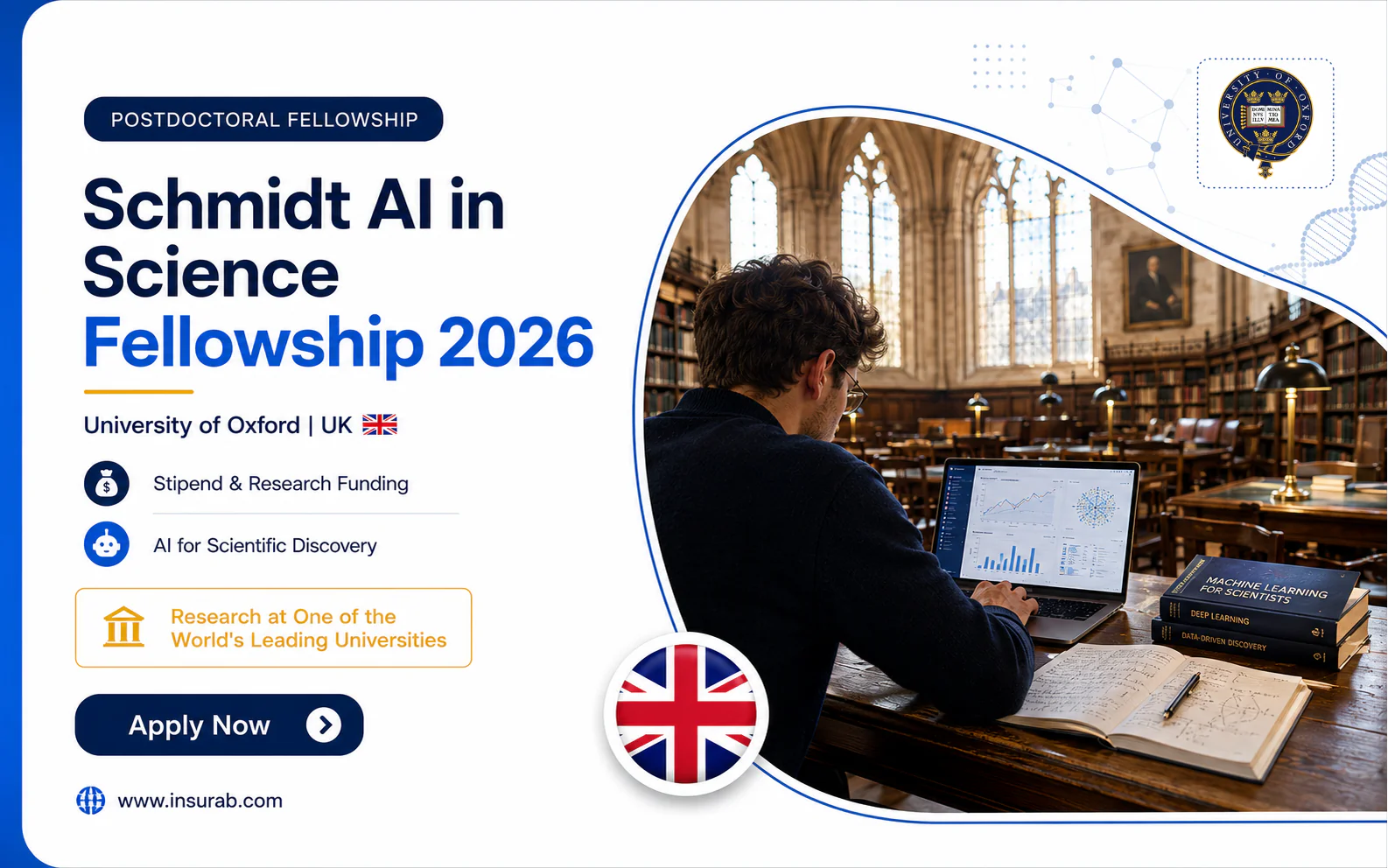
Also check: Eric and Wendy Schmidt AI in Science Postdoctoral Fellowship 2026 | University of Oxford
Also check: GovAI Research Fellowship 2026 | UK & USA Visa Sponsorship